About
I am a PhD student in the Nonlinear Controls and Robotics group at the University of Florida, advised by Professor Warren E. Dixon and coadvised by Professor Dan P. Guralnik.
I study machine learning systems, especially generative models, through the lens of nonlinear control and dynamical systems. I use Lyapunov analysis, geometry, and optimization to understand and interpret their behavior and investigate the manifold structures underlying learning and generation. My goal is to use this understanding to improve model structure and develop new algorithms with rigorous guarantees on stability, convergence, and safety.
Before joining UF for my PhD, I earned an M.S. in Computer Science from Johns Hopkins University and an M.S. in Mechanical Engineering from UF. I received my B.S. from Tongji University in Shanghai.
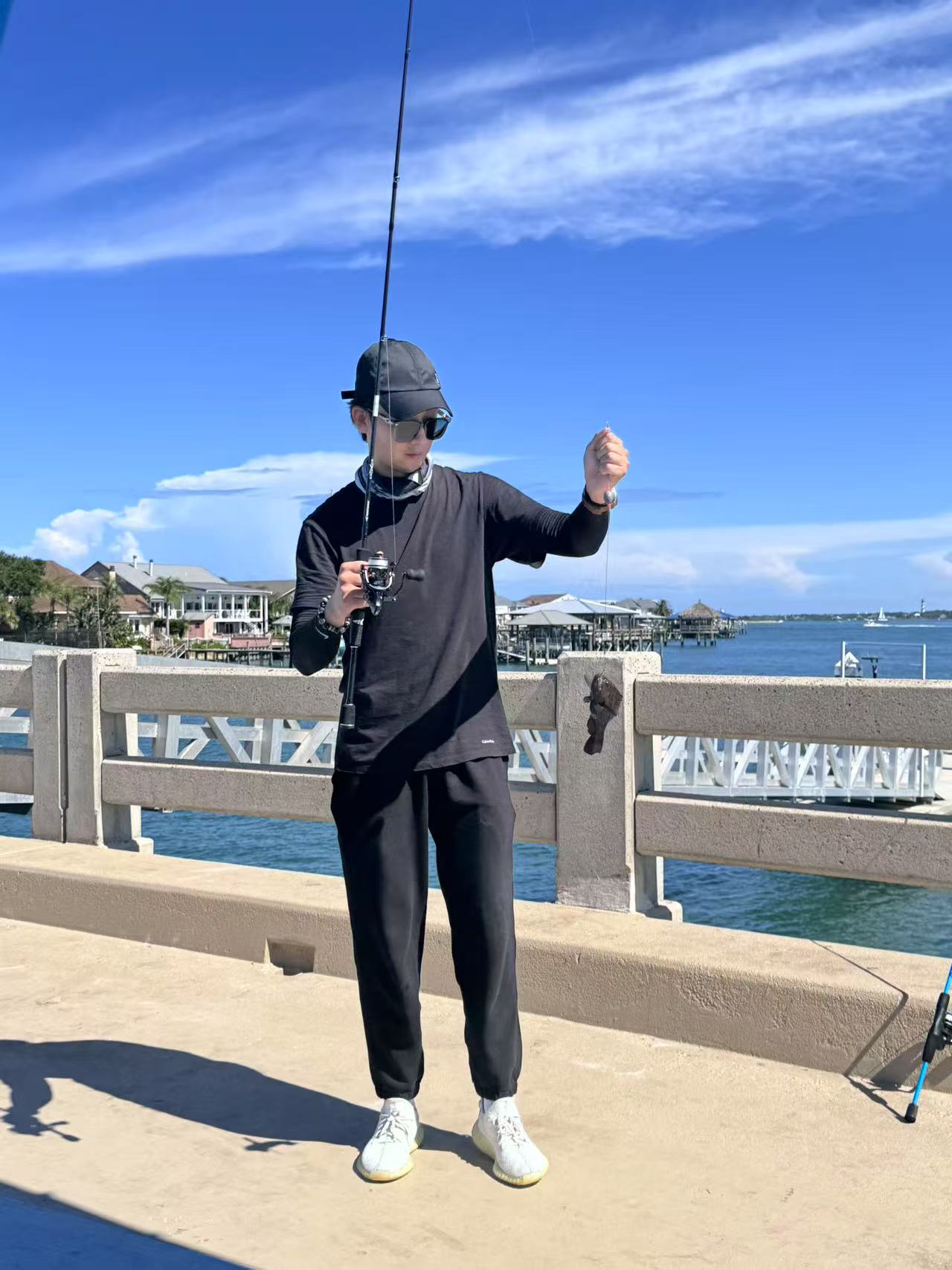
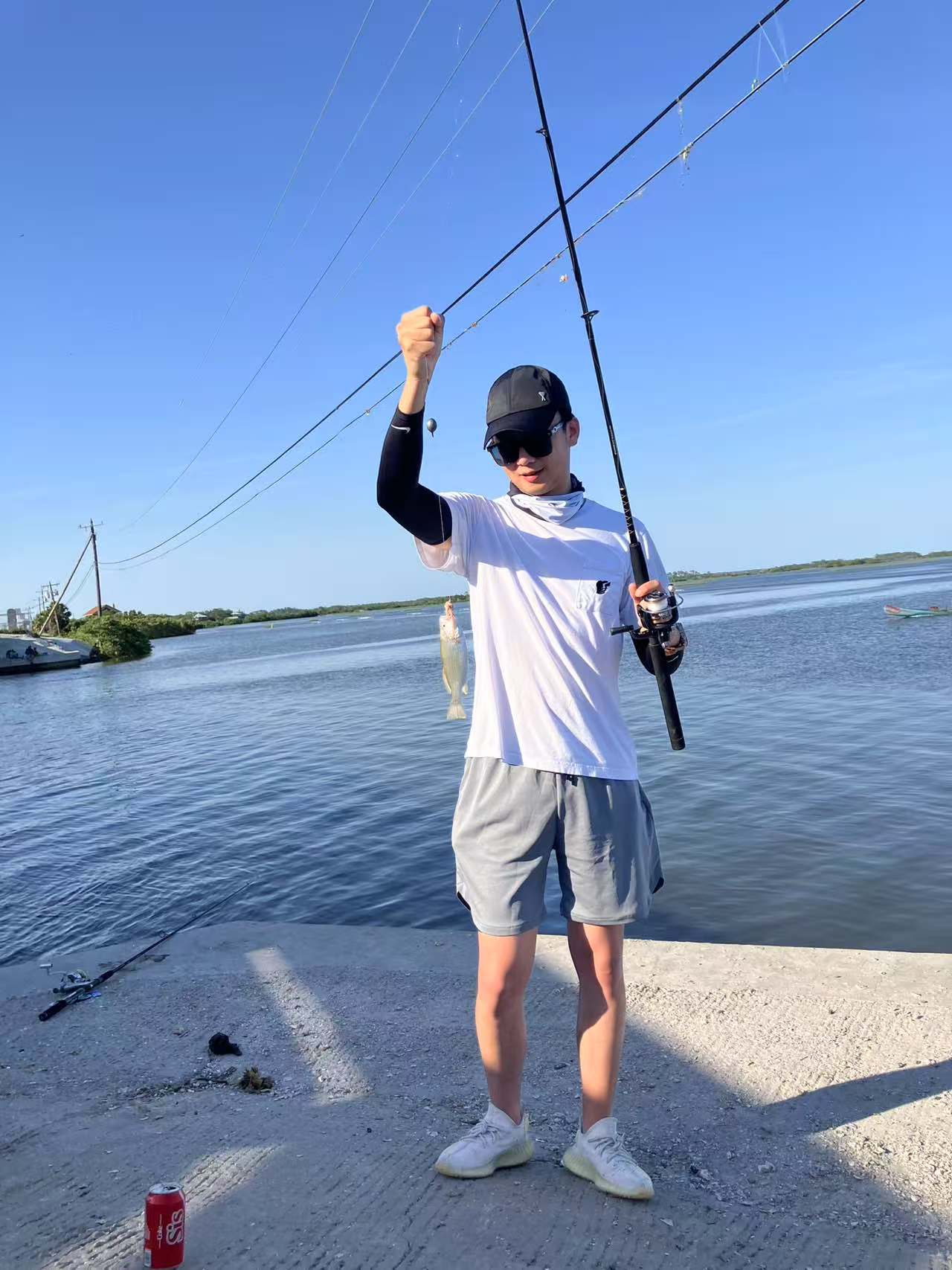
Beyond research. You'll likely find me by the water — a fisherman who enjoys the patience and calm of a good catch. I believe the best ideas come when you step away from the whiteboard.
Job Market
I will complete my PhD in May 2027 and am seeking postdoctoral and research scientist positions.
My Academic CV is intended for postdoctoral, faculty, and national laboratory positions; my Research Resume is intended for industry research scientist roles.
Research Interests
News
- Sep 2026
- Sep 2026“Riemannian Lyapunov Framework: Optimization as Closed-Loop Control on Riemannian Manifolds” accepted to NeurIPS 2026.
- Aug 2026
- Aug 2026“Quantifying Trade-Offs Between Stability and Goal-Obfuscation” accepted to IEEE CDC 2026.
- May 2026“Effective Model Pruning” accepted to ICML 2026 as a Spotlight.
- Mar 2026“Rao-Blackwellized particle filter for agent's intention inference” accepted to IFAC World Congress 2026.
Publications
-
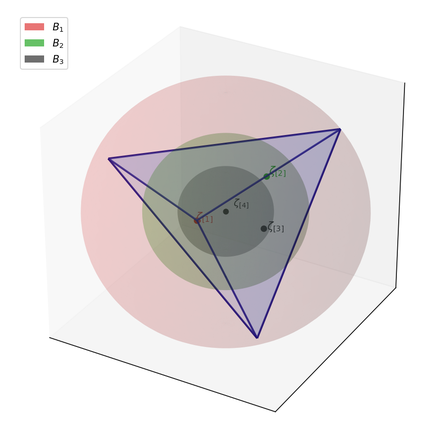
Effective Model Pruning: Measuring the Redundancy of Model Components
Given any importance scores over model components, how many can be dropped for free? The effective sample size of the score distribution yields an adaptive sparsity level with a provable bound on the loss change. -
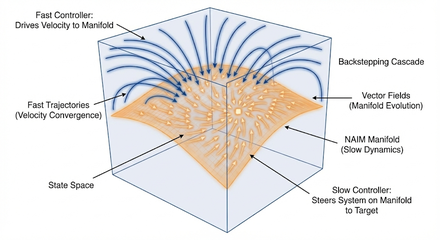
Riemannian Lyapunov Framework: Optimization as Closed-Loop Control on Riemannian Manifolds
Formulates optimization as a controlled dynamical system on a Riemannian manifold, using Lyapunov analysis to recover classical update rules and systematically construct new optimizers. -
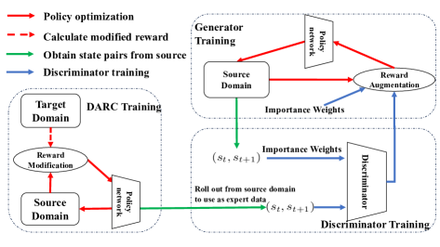
Off-Dynamics Reinforcement Learning via Domain Adaptation and Reward Augmented Imitation
Deploying a source-trained policy under dynamics shift: DARAIL modifies rewards for domain adaptation, then transfers the policy via reward-augmented imitation learning so it reproduces the right trajectories in the target domain — with an error bound and gains on off-dynamics benchmarks. -
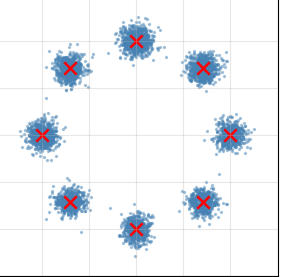
Energy Generative Modeling: A Lyapunov-based Energy Matching Perspective
Sampling from an energy-based generative model is a control problem: KL as the Lyapunov function gives Langevin sampling a principled finite-step stopping rule — and opens the door to safety, with barrier functions for constrained generation. -
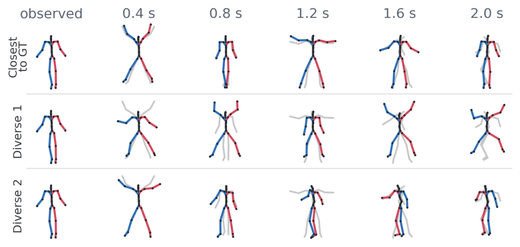
Skeletons in Flow: Graph Structured Flow Matching for Human Motion Prediction
Graph structured flow matching that transports the whole future skeleton trajectory at once, preserving bone lengths by construction; state-of-the-art ADE on AMASS and zero-shot transfer to an unseen skeleton. -
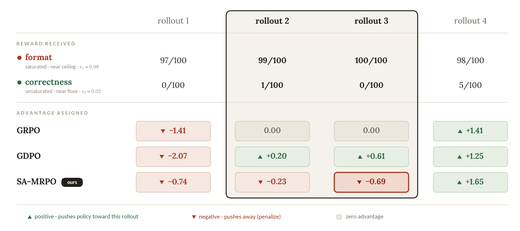
Learn What's Left, Not What's Mastered: Saturation Aware Advantage Reweighting for Multi-Reward Policy Optimization
Multi-reward RL for LLM reasoning keeps spending gradient on objectives the policy has already mastered: SA-MRPO standardizes each reward separately and reweights advantages by batch-level saturation, redirecting optimization toward what is left to learn — with gains on math, adaptive reasoning, and coding benchmarks. -
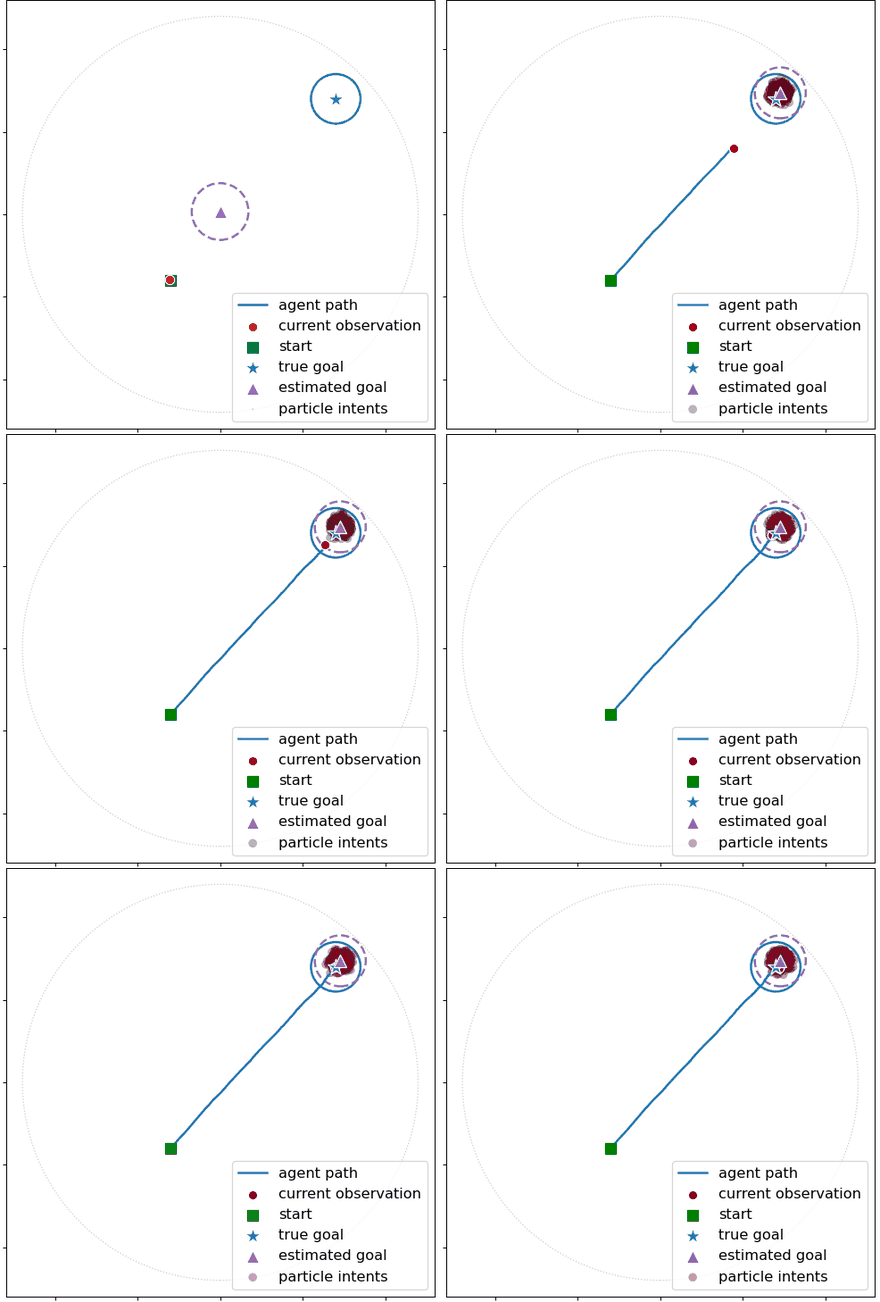
Rao-Blackwellized particle filter for agent's intention inference
An RBPF can infer your agent's goal simply from observing its past trajectory. -
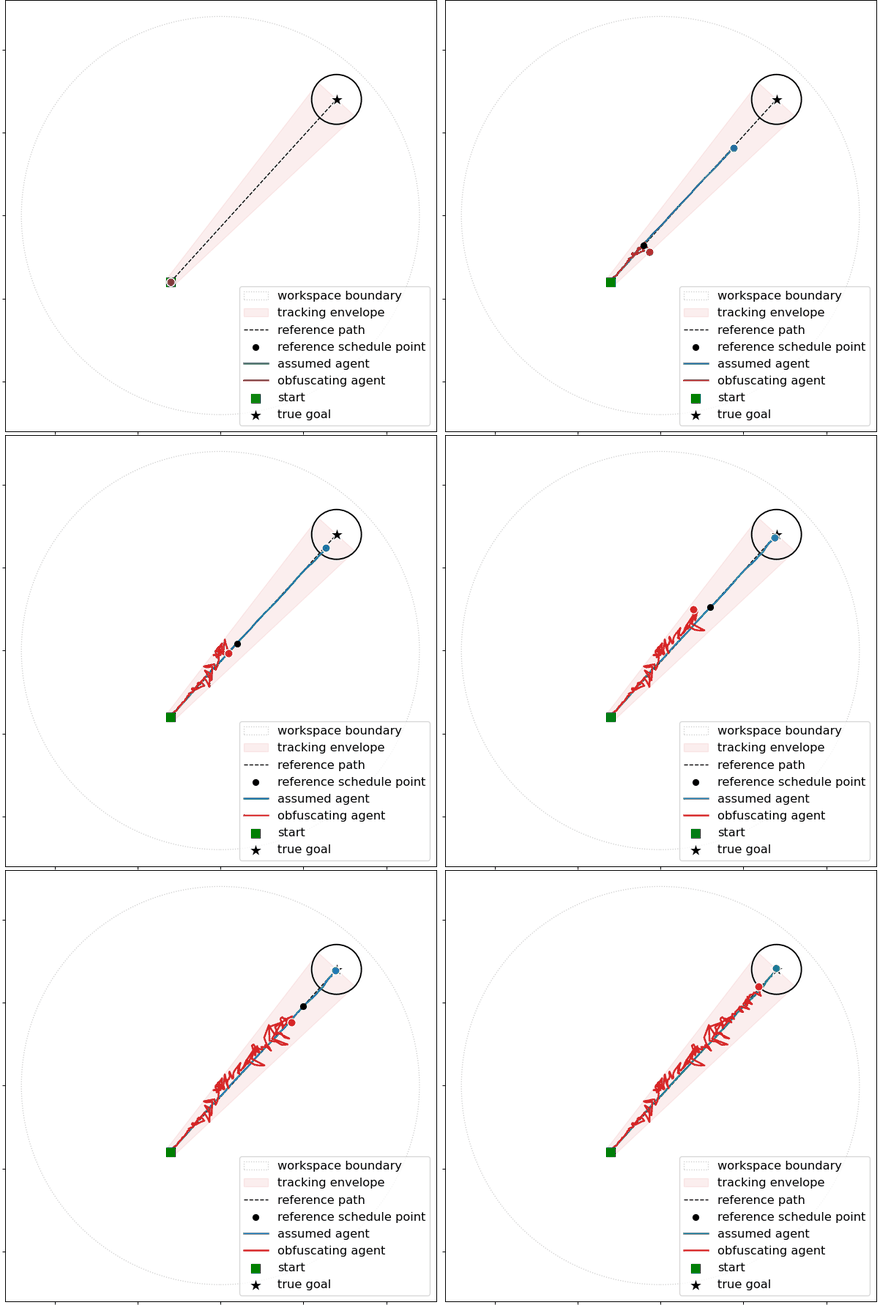
Quantifying Trade-Offs Between Stability and Goal-Obfuscation
Given an adversary trying to infer your goal, probabilistic control barrier functions (PCBFs) provide formal bounds on goal information disclosure while preserving the underlying tracking objective. -
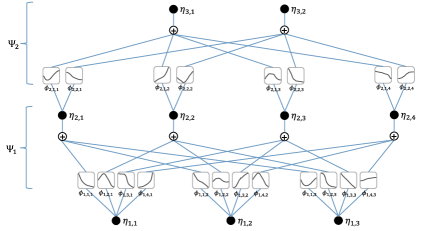
Lyapunov-Based Kolmogorov-Arnold Network (KAN) Adaptive Control
The first Lyapunov-based adaptive controller built on Kolmogorov-Arnold networks (KANs): real-time learning with asymptotic tracking guarantees and an interpretable functional decomposition of the learned dynamical system.
Education
-
PresentPh.D. in Mechanical & Aerospace EngineeringUniversity of FloridaAdvisor: Prof. Warren E. Dixon · Nonlinear Control Theory, Machine Learning, Robotics
-
2024M.S. in Computer ScienceJohns Hopkins University
-
2022M.S. in Mechanical EngineeringUniversity of Florida
-
2020B.S. in Mechanical EngineeringTongji UniversityMechanical Design, Manufacture and Automation